Patterns of Resource Stewardship: Insights from Multi-Sport Live Decision Sequences in Team and Individual Events
Mia Simmons · Aug 24, 2026
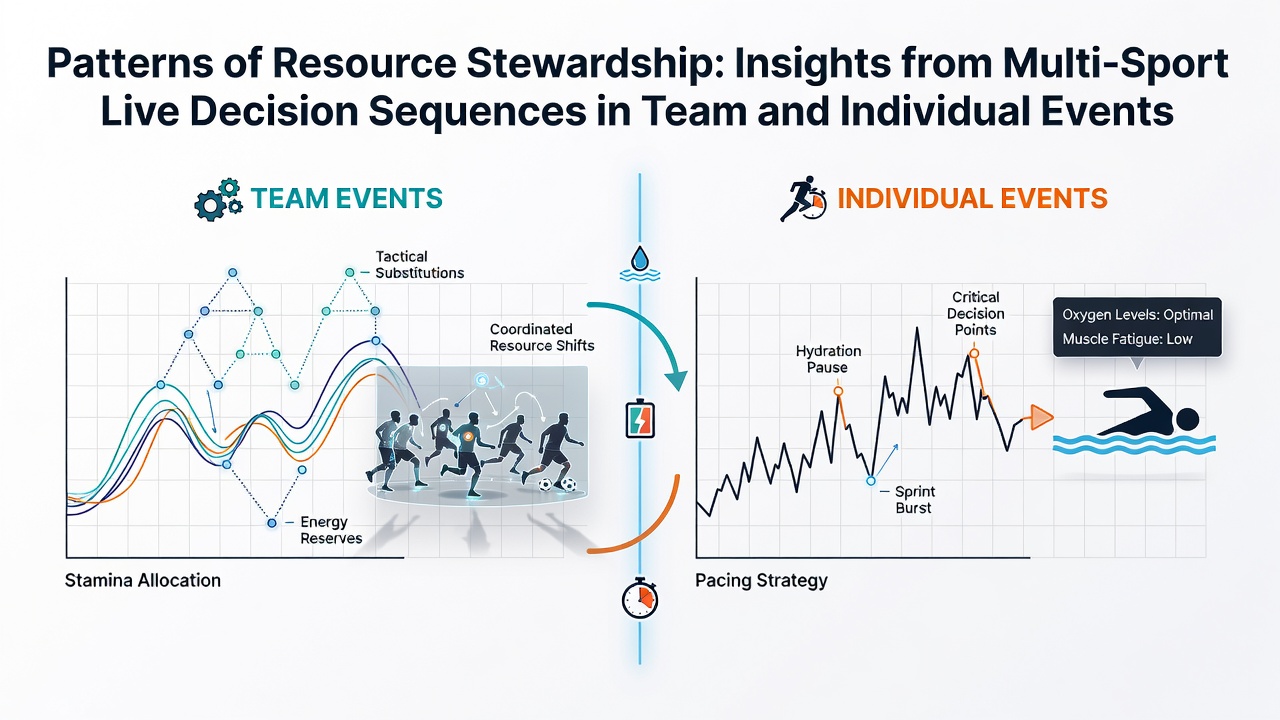
Patterns of Resource Stewardship: Insights from Multi-Sport Live Decision Sequences in Team and Individual Events
Resource stewardship in sports involves the careful allocation of physical energy, tactical adjustments and mental focus during live competitions, and researchers have documented distinct patterns across team and individual formats. Studies from the Australian Institute of Sport show that these patterns emerge through repeated sequences of decisions made under time pressure, where athletes and support staff balance immediate demands against longer-term sustainability.
Core Mechanisms in Team Events
Team sports such as basketball and soccer require coordinated resource distribution among multiple players, with coaches often tracking fatigue markers through wearable technology to time substitutions effectively. Data collected during international tournaments indicate that teams maintaining balanced rotation schedules preserve higher output levels in later stages, whereas those relying on star players for extended minutes show measurable declines in speed and accuracy after the 70-minute mark. Observers note that live decision sequences in these environments hinge on collective awareness, where one player's choice to conserve effort can influence the entire unit's positioning and defensive structure.
European football leagues provide additional examples, as mid-season schedules force clubs to manage squad depth across domestic and continental fixtures. Analysts tracking player tracking data from the 2025-2026 campaigns found that sides implementing structured recovery protocols between matches sustained higher pass completion rates through August 2026 fixtures, a period marked by dense fixture lists following major international windows.
Decision Patterns in Individual Events
Individual sports present different stewardship challenges because athletes bear sole responsibility for pacing and tactical shifts. In tennis and triathlon, competitors adjust effort based on real-time physiological feedback, often conserving energy in early segments to deploy decisive surges later. Research published by Canadian university sports science programs reveals that elite tennis players who vary serve intensity and court positioning across sets maintain higher win probabilities in deciding sets compared with those maintaining constant high intensity from the start.
Golf tournaments further illustrate this principle, where players navigate 72-hole events by calibrating risk on each shot according to leaderboard position and course conditions. Live decision sequences here involve continuous reassessment of club selection and target lines, with data showing that consistent conservative choices in the middle rounds correlate with stronger final-round performances when wind or pin placements increase difficulty.
Comparative Insights Across Formats
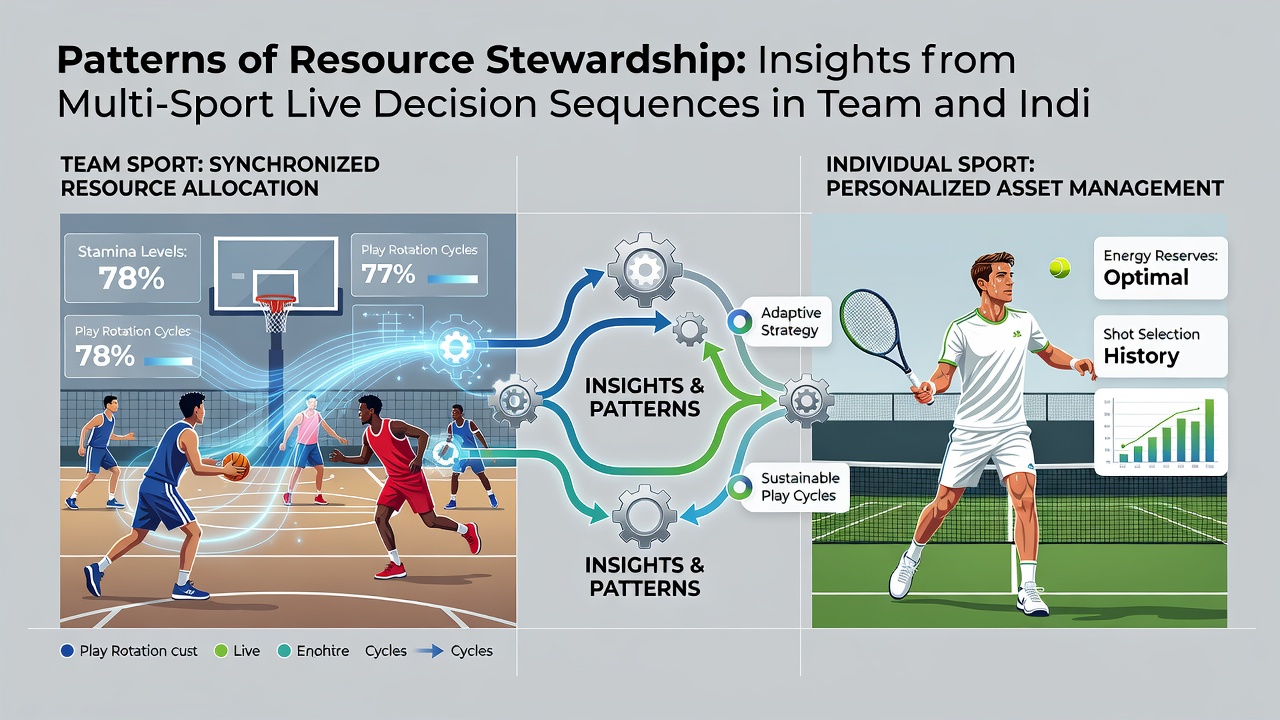
Cross-sport analyses highlight how team environments distribute cognitive load across coaching staff and on-field leaders, while individual athletes internalize all monitoring functions. A joint report from the International Olympic Committee and several national training centers notes that hybrid training programs blending team and individual drills improve athletes' ability to recognize when to conserve versus expend resources. These programs, implemented ahead of the 2026 competitive calendar, produced measurable improvements in late-competition output for both formats.
What's interesting is the role of external data streams in shaping live sequences. Teams and individuals increasingly integrate heart-rate variability, GPS metrics and opponent scouting feeds into split-second choices, yet the underlying patterns remain consistent: successful stewards prioritize sustainability over short-term spikes unless the situation demands immediate commitment.
Case Examples from Recent Seasons
One documented sequence occurred during a major basketball tournament in 2025, where a team's coaching staff used real-time load management to rest key players during low-stakes possessions, preserving them for critical closing minutes. Similar approaches appeared in individual cycling stages, where riders conserved energy on climbs before launching timed attacks on descents. Those who've examined performance databases across these events observe recurring themes of threshold identification, where athletes learn to operate just below fatigue points until strategic moments arise.
August 2026 schedules across multiple continents continue to test these patterns, as overlapping seasons in soccer, tennis and golf force repeated rapid transitions between formats. Training academies report increased emphasis on cross-disciplinary recovery techniques to support athletes competing in mixed calendars.
Conclusion
Patterns of resource stewardship ultimately reflect the interaction between sport structure, available data and individual or collective discipline. Team events distribute stewardship across roles, while individual events concentrate it within the athlete, yet both rely on accurate live assessment of energy, tactics and opponent responses. Ongoing collection of performance metrics from international competitions supplies the evidence base for refining these sequences, and governing bodies continue to support research that quantifies how different allocation strategies affect outcomes across diverse event types.