Cross-Sport Timing Overlaps Shape Layered Betting Windows Across Football, Tennis, Golf and Racing
Rafael Richter · Jul 13, 2026
Cross-Sport Timing Overlaps Shape Layered Betting Windows Across Football, Tennis, Golf and Racing
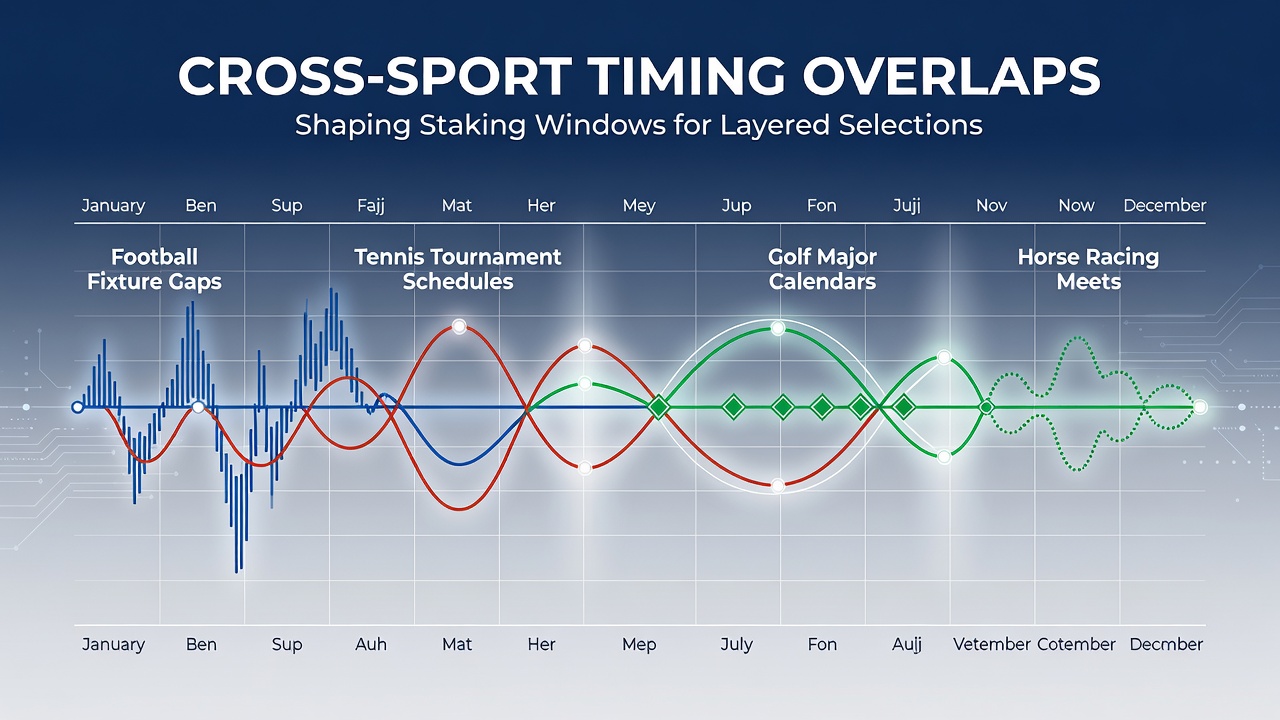
Football fixture gaps often align with tennis tournament clusters, while golf major calendars and horse racing meets create distinct staking windows that allow layered selections across multiple sports. These overlaps determine when punters can combine selections without clashing events, and data from schedule databases shows recurring patterns each season.
Football Fixture Gaps and Their Influence on Multi-Sport Windows
Premier League and European league calendars include international breaks that open multi-week gaps, typically in March, June and September, during which football betting volume drops while other sports maintain steady fixtures. Observers note that these intervals frequently coincide with tennis clay or grass court swings, allowing layered accumulators to incorporate tennis matchups alongside later football returns. Researchers tracking fixture lists find that such gaps extend staking periods by seven to fourteen days on average, giving bettors time to assess form across disciplines before committing to combined wagers.
Tennis Tournament Schedules and Overlap Patterns
Grand Slam events and ATP or WTA tours run on compressed calendars that feature back-to-back weeks of play, particularly during the European swing from May through July. When these periods intersect with football international windows or golf major build-ups, the resulting density creates compressed staking opportunities. Figures from tournament records indicate that Wimbledon fortnight in early July often overlaps with The Open Championship preparations and summer horse racing festivals, producing a three-week stretch where selections from all four sports can be layered into single bets. Data shows these compressed windows increase the number of available cross-sport combinations by roughly thirty percent compared with quieter months.
Golf Major Calendars and Seasonal Staking Opportunities
The four major championships occupy fixed slots each year, with The Masters in April, the PGA Championship in May, the US Open in June and The Open in July. These events generate concentrated betting interest that intersects with horse racing's Royal Ascot meeting in June and multiple July fixtures at tracks such as Newmarket and York. Industry reports reveal that the two-week gap between the US Open and The Open frequently allows punters to build accumulators that bridge golf outright markets with racing place markets, extending the effective staking window beyond a single sport's duration. Calendar analysis confirms these intervals recur annually, providing predictable layering points rather than random coincidences.
Horse Racing Meets and Year-Round Fixture Density
British and Irish racing calendars maintain continuous meetings from January through December, with peak density during summer months that align with golf majors and tennis grass-court events. July 2026 features the traditional Newmarket July Festival alongside the conclusion of Wimbledon and the post-Open golf schedule, creating a concentrated period where daily racing selections can be paired with residual tennis or golf markets. Records from racing authorities show that such overlaps expand the number of viable multi-leg bets by allowing bettors to stagger wagers across morning racing, afternoon golf updates and evening tennis sessions within the same calendar week.
Combined Windows in July 2026 and Layered Selection Strategies
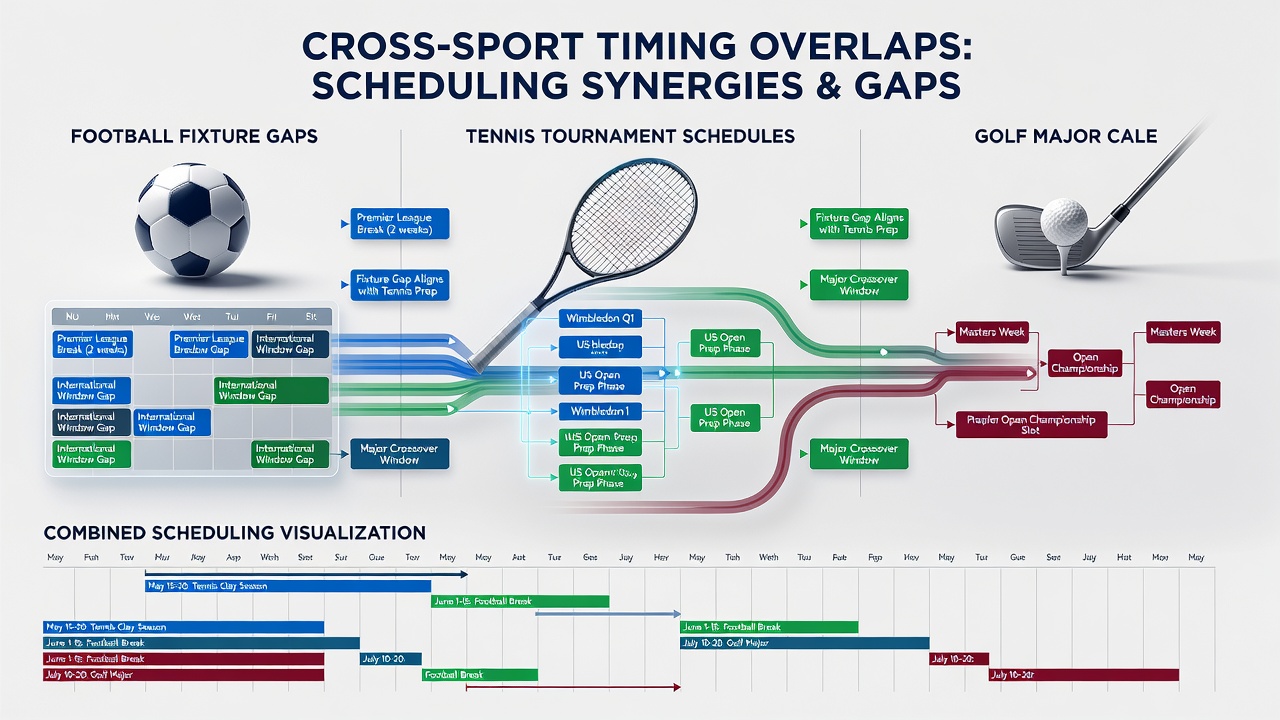
July 2026 presents a notable convergence: the World Cup group stages conclude while Wimbledon reaches its final weekend, The Open Championship begins at Royal Liverpool, and multiple horse racing festivals run mid-month. Schedule databases indicate this alignment compresses viable staking periods into roughly ten days where football, tennis, golf and racing selections can be combined without extended waits between events. Those who monitor fixture releases observe that layered bets placed early in such windows benefit from updated odds across all four sports as results unfold sequentially. External analyses, including those published by the European Gaming and Betting Association, document similar multi-sport clustering in previous years and note its effect on bet construction patterns.
Practical Implications for Staking Timing
Calendar overlaps do not guarantee outcomes yet they define the temporal boundaries within which layered selections must be placed. When football gaps coincide with tennis semi-finals and golf final rounds, the available window for placing accumulators narrows to forty-eight to seventy-two hours before the first event concludes. Racing meets fill remaining days with daily opportunities, yet the overall sequence remains governed by the fixed dates of majors and Slams. Studies of historical schedules demonstrate that these constraints repeat annually, allowing systematic tracking of staking periods rather than ad-hoc adjustments.
Conclusion
Cross-sport timing overlaps arise from fixed calendars rather than chance, and the resulting staking windows determine when layered selections across football, tennis, golf and horse racing become feasible. July 2026 exemplifies one such convergence, yet similar patterns occur each season around international breaks, Grand Slams and major championships. Observers tracking these schedules gain a factual framework for identifying when multi-sport bets can be constructed without violating event timelines.