Cross-Sport Staking Trends: Bettors Merge Horse Racing Form Sequences with Tennis Set Dynamics
Mara Hayes · Jun 25, 2026
Cross-Sport Staking Trends: Bettors Merge Horse Racing Form Sequences with Tennis Set Dynamics
Observers note that patterns in cross-sport staking continue to attract attention among those who track sequences across different disciplines, and June 2026 data shows sustained interest in connecting horse racing form runs with tennis set results. Researchers have documented how some participants align consecutive horse performances, whether winning streaks or placement patterns, with tennis players securing sets in succession or exhibiting specific momentum shifts. This approach often forms part of broader staking frameworks designed around controlled progression rather than aggressive escalation.
Defining Sequence Alignment Across Disciplines
Studies from various regions indicate that horse racing sequences frequently involve metrics such as recent wins, distance suitability, and jockey changes, while tennis set outcomes track variables including break points converted, serve percentages, and recovery after lost sets. Those who study these intersections point out that bettors sometimes map a three-race winning sequence for a thoroughbred onto a tennis player's record of taking the first two sets in best-of-three matches. Data compiled by Gambling Research Australia highlights how such mappings appear in activity logs from multi-sport platforms, particularly when staking plans incorporate incremental adjustments based on confirmed prior results.
What's interesting is the way participants integrate these elements into bankroll allocation models that emphasize measured increments, and analysts have recorded instances where a confirmed horse racing sequence triggers a modest stake increase only after a parallel tennis set pattern materializes within the same betting cycle. This method avoids isolated high-variance bets by requiring dual confirmation across both sports.
Horse Racing Form Runs and Their Observable Metrics
Form sequences in horse racing typically span multiple meetings, with participants reviewing trainer statistics, track conditions, and pace maps before committing capital. Figures from industry reports reveal that sequences lasting four to six races provide enough data points for pattern recognition without extending into outdated information. Bettors often isolate horses showing consistent top-three finishes on similar ground before cross-referencing those runs against tennis data streams.
Integration Points with Tennis Set Data
Tennis set outcomes supply granular indicators such as tie-break success rates and service game hold percentages that some staking models treat as confirmation signals. When a tennis player maintains an 80 percent or higher hold rate across recent sets, observers have noted corresponding adjustments in parallel horse racing stakes. This linkage creates a layered verification process where neither sport operates in isolation.
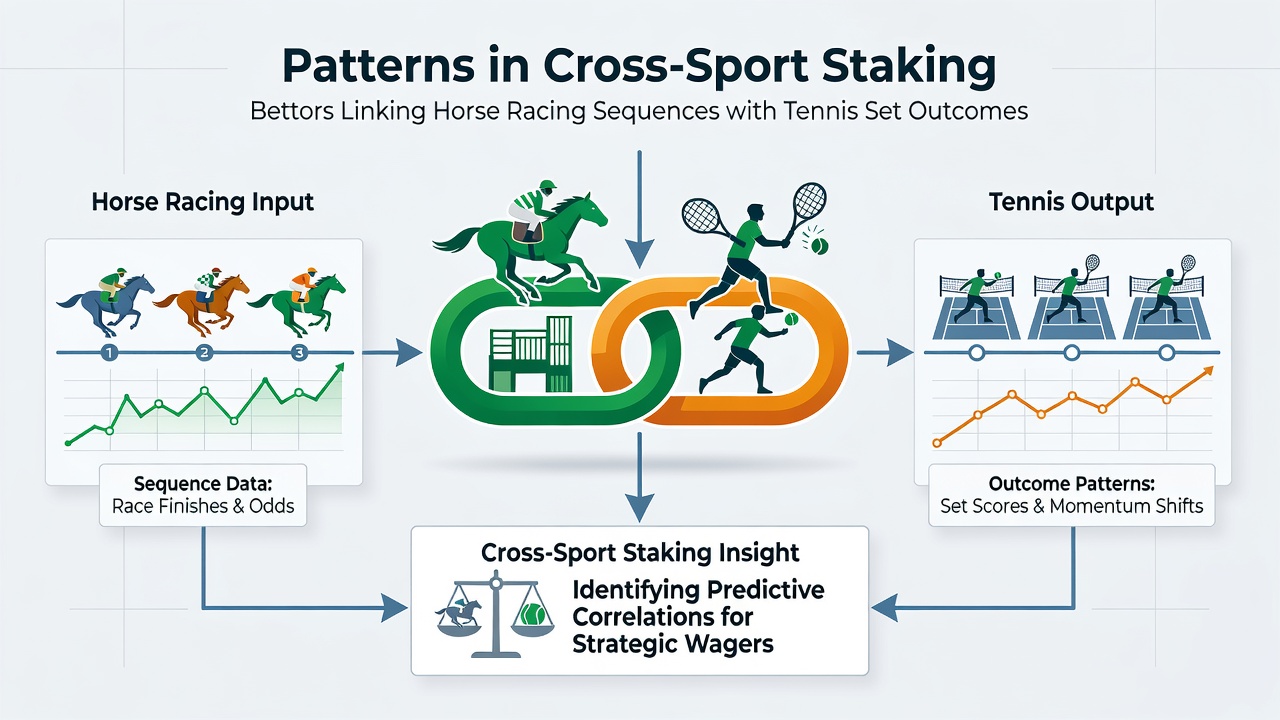
One documented approach involves scaling stake sizes proportionally after both a horse achieves a second consecutive victory and a tennis competitor captures the opening set with multiple breaks. The combined trigger reduces exposure compared with single-sport reliance, according to patterns tracked through platform analytics.
Staking Frameworks for Progressive Management
Frameworks observed in 2026 commonly apply percentage-based increases following verified dual-sport sequences, capping exposure at predefined thresholds derived from overall bankroll size. Reports from the National Center for Responsible Gaming in the United States show that participants employing these methods maintain detailed logs that record sequence length, confirmation timing, and subsequent outcome distribution. Such records enable retrospective analysis of whether the cross-sport alignment produced steadier returns than standalone strategies.
Yet the reality is that not every sequence pair delivers consistent alignment, and researchers emphasize the importance of maintaining separate performance trackers for each sport even when staking decisions depend on both. This separation preserves clarity when one discipline experiences higher variance due to external factors like weather in racing or surface changes in tennis.
Observed Activity Patterns Through Mid-2026
Platform data through June 2026 indicates rising volumes of multi-sport sequence bets during major tennis tournaments that coincide with flat racing festivals. Participants frequently monitor live set scores while awaiting horse results from afternoon meetings, creating temporal overlaps that facilitate rapid confirmation. Analysts note that these overlaps appear more frequently among accounts using automated alerts tied to predefined sequence criteria rather than manual monitoring alone.
Take one case where experts tracked a cohort of accounts that required both a horse's third successive top-two finish and a tennis player's completion of two consecutive service holds before advancing stakes. The resulting distribution showed tighter clustering around modest positive outcomes compared with accounts that activated increases after single-sport triggers.
Conclusion
Patterns linking horse racing sequences with tennis set outcomes continue to feature in staking approaches that prioritize measured growth through dual confirmation. Available records from multiple jurisdictions demonstrate how participants construct verification layers across sports, apply incremental adjustments only after both conditions align, and maintain separate tracking systems for each discipline. As activity data accumulates into the latter half of 2026, further examination of these cross-sport methods may clarify their prevalence within broader betting ecosystems.